The Clavis Incognita
~ Friday, November 15, 2019 ~
In September of this year I spent three weeks at the Archivum Romanum Societatis Iesu in Rome, working through a run of Bohemian Province correspondence from the late seventeenth and early eighteenth centuries. The material I was looking for concerns the missionary effort in rural Bohemia after the Battle of White Mountain — the same campaign documented in the reports I have been writing about for several years. I found what I was looking for. I also found something I was not looking for at all.
It was in a small envelope tucked inside a bundle of administrative correspondence, catalogued in the margin of the bundle’s cover sheet as clavis incognita, e Bohemia — an unknown key, from Bohemia. No further annotation. No date. No indication of how it arrived in Rome or when.
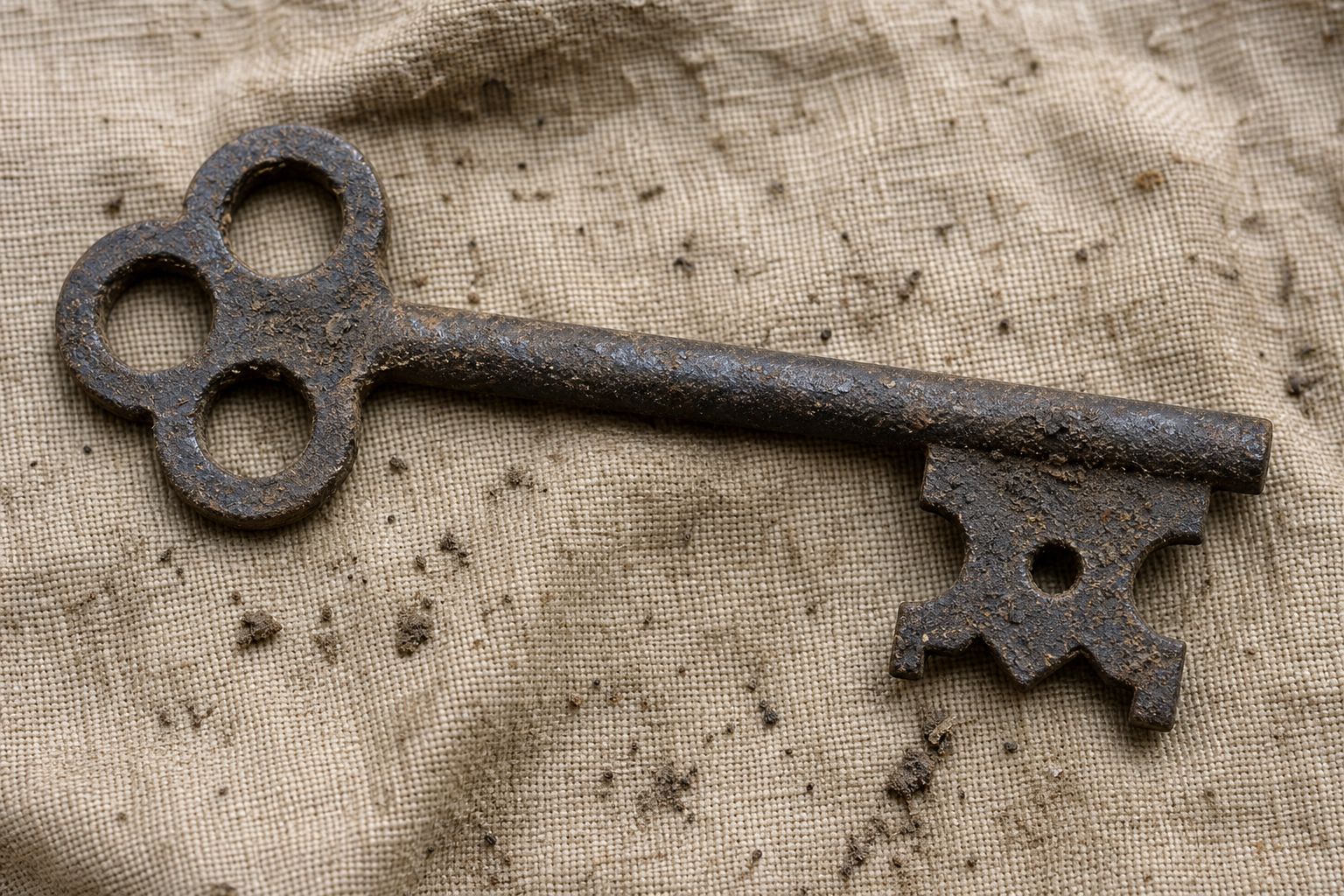
The key is iron, heavily corroded, the surface pitted and dark with age. It is not a modern key. The shaft is long and plain. The bit — the working end — is cut in an ornamental pattern. The head, at the opposite end, bears three circular openings arranged in a trefoil: two side by side, one below, the whole forming a shape that recurs with some frequency in the decorative vocabulary of the period.
I was permitted to examine and photograph it. I have since arranged to keep it, with the archive’s agreement, as part of an ongoing research loan. It is now in Honolulu.
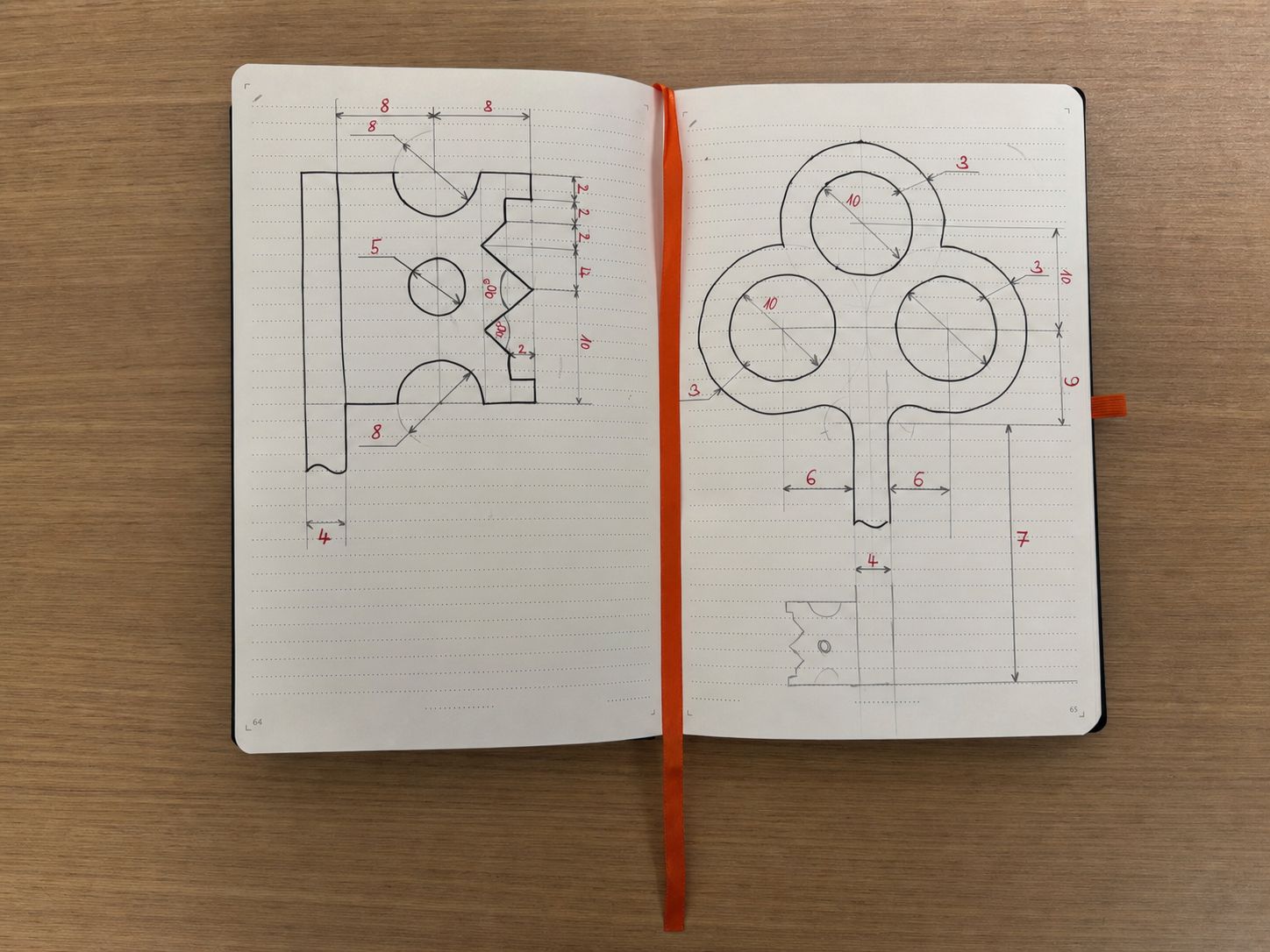
Before leaving Rome I made precise technical drawings with full measurements. I am publishing them here for the record.
What the custodian literature says
I want to be careful here. I am not claiming more than the evidence supports.
The custodian literature I have been working through for the past several years — the texts I wrote about in Those Who Held the Sign and in earlier pieces — contains a category of object that is described, across several distinct sources, as a reading instrument. Not a key in the ordinary sense. The word used in the Latin sources is clavis, but the context makes clear that the function is not to lock or unlock a door. The phrase that recurs is ad legendum, non ad claudendum — for reading, not for closing. An instrument for placing, not for turning.
The descriptions of this instrument — where they exist, which is not often — mention a head with multiple openings. The number three is specified in two of the sources I have found. The trefoil arrangement is not explicitly described, but it is consistent with what is described.
I am not saying this is the instrument the custodian literature refers to. I am saying it is consistent with the descriptions, that it was found in Bohemian materials, and that whoever catalogued it in Rome had no framework for understanding what it was — which is itself a form of evidence.
What I do not know
I do not know what this key reads. The custodian literature is clear that the reading instrument has no function without what it is meant to be placed upon. An instrument for placing. Whatever it is placed upon, I have not found it.
I do not know how the key reached Rome. The bundle it was found in dates from the 1690s to the 1720s — the same period as the Bohemian reconversion campaign. Whether it came to Rome as a confiscated object, a curiosity sent along with correspondence, or something else entirely, the envelope does not say.
I do not know how old it is. Iron of this type and corrosion could be consistent with a wide range of dates. I have not had it formally dated.
What I know is that it is here, in my study, and that the archive had no use for it and no understanding of it, and that I may be the first person to hold it who has any framework for asking what it might mean.
That is not the same as knowing.
Related
- Those Who Held the Sign — the keeper tradition; the permanent vessel; the mark that outlasts its bearer
- The Number Beyond the Count — on what survives by being distributed and left incomplete